A casserole that is raw in the center but burned around the edges is not always a recipe problem. When homeowners ask what causes oven temperature inconsistency, the answer is usually a part that is no longer measuring, producing, or regulating heat correctly. The good news is that many oven temperature problems can be diagnosed without replacing the whole range.
A little temperature movement is normal. Ovens heat past the set temperature, cycle off, then turn back on to maintain an average temperature. But repeated undercooking, scorched bottoms, long preheat times, or a 50-degree difference from one use to the next point to a problem worth checking.
What Causes Oven Temperature Inconsistency?
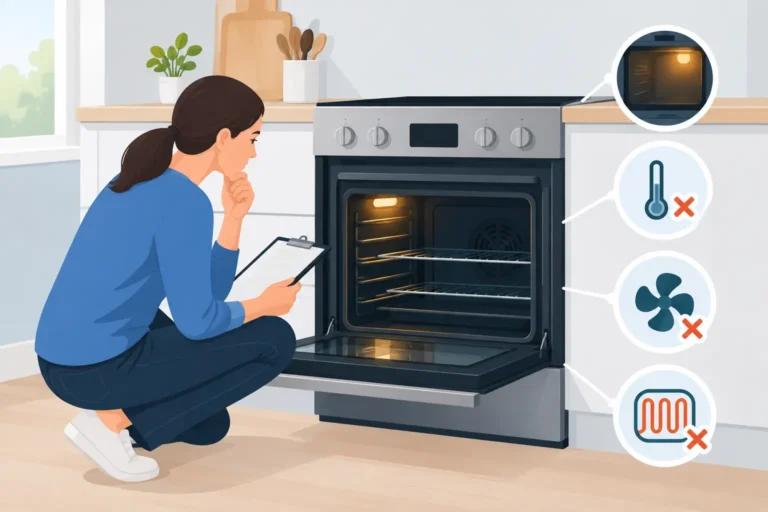
The most common causes are a failing temperature sensor, a weak bake or broil element, a damaged control board, poor door sealing, or an oven that needs calibration. Gas ovens can also have ignition or burner problems that create uneven heat. Which one is likely depends on the symptoms, the oven type, and whether the issue happens in bake, broil, convection, or every cooking mode.
A failing temperature sensor sends the wrong reading
The temperature sensor is the slim metal probe inside the oven cavity, usually mounted near the back wall. It tells the electronic control how hot the oven is. If it drifts out of range, the control may think the oven is hotter than it really is and shut the heat off too early. It can also do the opposite and overheat food.
This is one of the more common repairs for an oven that consistently runs too hot or too cool. A technician can test the sensor electrically and compare its reading to the manufacturer specification. For many standard ranges, replacing a sensor commonly falls around $180 to $350 including typical labor and parts, depending on the model and access.
Do not assume the sensor is bad just because a hanging oven thermometer disagrees with the display. Many inexpensive thermometers react slowly, and their reading changes based on where they sit in the oven. They are useful for spotting a large pattern, but they are not a precise diagnostic tool.
A weak bake element cannot maintain heat
In an electric oven, the bake element at the bottom does most of the work during normal baking. It may still glow and produce some heat even when it is failing. A weakened or partially damaged element can make preheating take too long, leave the oven 25 to 75 degrees short of the setting, or cause food to brown unevenly.
A visible blister, crack, burn mark, or section that does not heat evenly is a reason to stop using the oven until it is inspected. The U.S. Consumer Product Safety Commission advises consumers to address damaged appliance components rather than continuing to operate equipment that shows signs of electrical failure. Element replacement often runs about $200 to $450 for common models, while premium built-in ovens can cost more because of part pricing and access.
The broil element matters too. Some ovens use both elements during preheat or convection cooking. If one is weak, you may notice slow preheat times even though the oven eventually seems close to the selected temperature.
The control board or relay is not cycling heat properly
The electronic control board is the oven’s decision-maker. It receives the sensor reading and switches power to the heating elements or gas burner. A stuck relay can leave an element on too long. A failing relay can also cut heat too soon or create random temperature swings.
This is more likely when the temperature problem is erratic rather than consistently high or low. For example, the oven may perform normally one week and burn food the next, or it may continue heating after being turned off. Control board repairs and replacements often range from roughly $350 to $800 or more, especially on premium brands where the board may need to be ordered or programmed.
If an electric oven keeps heating after you turn it off, turn the appliance off at the breaker if you can do so safely and arrange service. Do not keep using it while waiting for the problem to repeat.
A worn door gasket lets heat escape
A flattened, torn, or loose door gasket can allow heat to leak out. The control then works harder to compensate, and the oven may struggle to hold temperature. You may feel unusually strong heat around the door, see steam escaping during cooking, or notice that baking improves when you press the door closed.
This is a homeowner check that does not require tools. With the oven cool, inspect the gasket for gaps, hardened sections, grease buildup, and places where it has pulled away from the frame. Wipe it gently with a damp cloth. Do not use a knife, abrasive pad, or adhesive unless the manufacturer specifically directs it.
Calibration may be off, but it is not always the whole answer
Many electronic ovens allow a temperature adjustment, often called calibration or offset. The owner’s manual may permit changing the displayed setting by a limited number of degrees. Calibration can help when an otherwise healthy oven is consistently a little high or low.
It will not repair a sensor that is drifting, an element that is weak, or a faulty relay. If the temperature varies widely during a single cooking cycle, changes from day to day, or misses the set temperature by more than a modest amount, changing the calibration may only hide the real problem.
Symptoms That Narrow Down the Cause
The pattern matters more than one disappointing meal. If every item cooks too slowly, the oven may be running low, the bake element may be weak, or the door seal may be leaking. If the tops of foods burn while the centers remain underdone, uneven air movement, rack position, or a broil element that stays on too long may be involved.
If preheat takes much longer than usual, suspect an element, igniter, or control issue. On a gas oven, a weak igniter may glow but fail to draw enough current to open the gas valve reliably. That is not a homeowner repair. It requires proper testing because gas and electrical components work together.
Convection ovens add another variable. A failed convection fan can leave hot and cool zones, especially on multiple racks. The oven may reach its target temperature but still bake unevenly because the air is not circulating as designed.
Error Codes and Safety Warnings
Some ranges will identify a serious overheating condition with an error code. GE owner manuals commonly use F2 for an oven over-temperature condition, though meanings can vary by model. Frigidaire manuals commonly list F10 as a runaway temperature condition. Treat either message as a reason to stop using the oven and check the exact model manual before resetting anything.
If you smell gas, hear hissing near a gas range, or suspect a gas leak, do not light burners, operate switches, or try to diagnose the appliance. Leave the area and contact the gas utility or emergency services from outside. The CPSC gives the same basic guidance for suspected gas leaks.
For San Diego homes near the coast, salt air and humidity can speed up corrosion on connectors and electronic components over time. That does not mean every temperature issue is corrosion, but it is one reason an older oven can develop intermittent problems that are harder to reproduce.
Safe Checks Before Scheduling Service
Start by confirming that the range has full power. An electric oven can sometimes appear to work when one side of its 240-volt supply has tripped, leaving lights or the display on but preventing proper heating. Check the breaker once. If it trips again, leave it off and schedule service.
Next, make sure the oven door closes fully and the racks are seated correctly. Test with a simple meal you know well, using the center rack and allowing a full preheat. Avoid opening the door repeatedly, since each opening releases a significant amount of heat and can make a normal oven seem unstable.
Write down the selected temperature, cooking mode, preheat time, symptoms, and any error code. That information helps a technician reach the right diagnosis faster, particularly for landlords and property managers coordinating access to a San Diego rental.
Is It Worth Repairing an Oven With Temperature Problems?
Usually, yes, when the range is otherwise in good condition. According to the National Association of Home Builders’ Study of Life Expectancy, electric ranges average about 13 years and gas ranges about 15 years. A sensor, gasket, element, igniter, or fan repair can make good sense well before that point.
The decision changes when an older oven needs an expensive control board, has multiple failing parts, or has discontinued components. It also depends on the appliance. A repair that is hard to justify on a basic 14-year-old range may still be reasonable on a built-in Wolf, Thermador, Miele, or other premium unit because replacement involves cabinetry, installation, and a much higher purchase cost.
Alfa Appliances can diagnose unstable oven temperatures in San Diego County, explain the repair options and costs before work begins, and often has same-day appointments available. Call (619) 458-6508 or book online 24/7, because a reliable oven makes everyday meals much less stressful.