A washer that stops mid-cycle can turn one maintenance request into a scheduling problem for tenants, cleaners, leasing staff, and owners. For washer repair for property managers, the useful question is not just, “What broke?” It is, “Can the machine stay in service safely, what will the repair likely cost, and is putting money into it the sensible call?”
The answer depends on the failure, the washer’s age, and whether the problem is isolated or part of a larger pattern. A drain-pump repair on a six-year-old machine is usually a very different decision from a failed control board on a 13-year-old unit that has already needed several repairs.
What Washer Repairs Commonly Cost
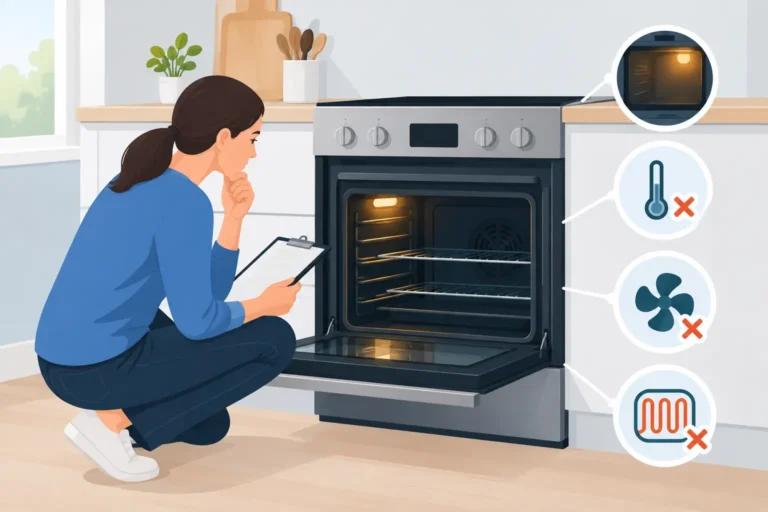
A proper estimate starts with a diagnosis. The same symptom can have more than one cause: a washer that will not spin may have an unbalanced load, a worn suspension system, a failed lid lock, a drain problem, or a motor-related fault. Replacing parts before testing is how a simple repair becomes an expensive guess.
At Alfa Appliances, the service call is $65 and is waived when the repair is approved. After diagnosis, the technician should explain the failed part, labor involved, and the total before work begins. Parts availability, washer design, and access can change the final number, but these are realistic broad ranges for many common repairs in the San Diego area:
- Drain pump replacement commonly runs about $180 to $400 total. A failed pump often leaves standing water in the tub or produces a humming sound without draining.
- Door or lid lock repairs often fall around $160 to $350. Front-load machines will not start or spin if the control cannot confirm that the door is locked.
- Water inlet valve repairs often range from $170 to $360. Slow filling, no filling, or water entering the tub when the washer is off can point to this valve.
- Suspension rods, shocks, or related balance repairs can run roughly $200 to $450. These parts help control tub movement during spin.
- Control board repairs or replacements can range from $300 to $700 or more, particularly on premium or electronically complex models.
These are ranges, not fixed-price promises. A stacked unit, a built-in laundry closet, a specialty part, or multiple failures can add time and cost. On the other hand, common parts carried on a service truck may allow a straightforward repair to be completed during the first visit.
The Codes That Help Narrow Down the Problem
Error codes are useful for triage, not final diagnosis. For example, Samsung washer manuals use 4C for a water-supply issue and 5C for a drainage issue. LG manuals commonly use OE to indicate a drain error. Those codes tell the technician where to start checking, but they do not automatically prove which part has failed.
A 5C or OE code may be caused by a blocked drain path, a damaged pump, excessive suds, or an installation issue. A water-supply code can result from a closed valve, a kinked hose, a clogged inlet screen, or a faulty inlet valve. Manufacturer manuals are clear on the basic meaning of these codes, but an on-site diagnosis is what separates a small correction from a parts replacement.
When a Washer Problem Is Urgent
Not every washer issue requires an immediate visit. A machine that occasionally leaves clothes wetter than usual can often be taken out of service and scheduled during normal maintenance planning. A machine leaking onto flooring, however, needs attention right away.
Stop using the washer and arrange service promptly if water is pooling around the appliance, the washer has a burning smell, the breaker trips repeatedly, or the unit makes loud banging or grinding noises. A water leak can damage flooring and units below. Repeated breaker trips can indicate an electrical fault and are not something a tenant should keep testing.
For a washer that will not drain, ask the occupant not to force the door or continue restarting cycles. Water can overflow when a door is opened or when a partially blocked drain backs up. If the washer is stable and there is no leak, tenants can safely check that the water supply valves are open, that the drain hose is not visibly kinked, and that the load is not packed into one heavy item. They should not remove panels or attempt electrical repairs.
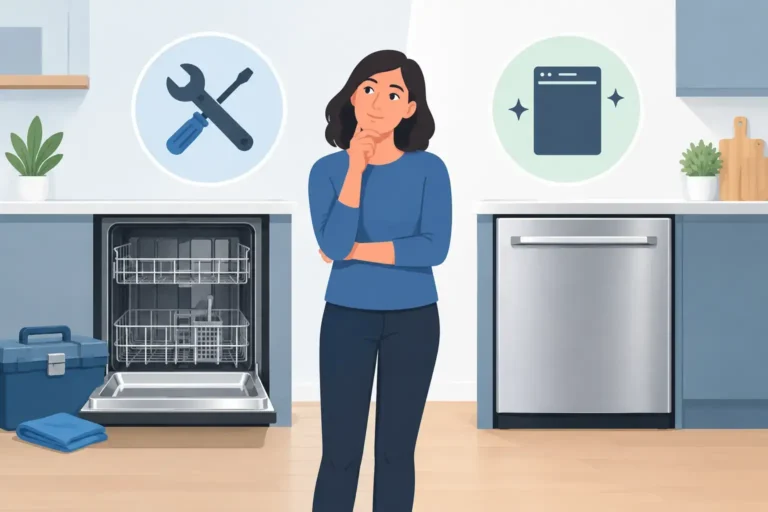
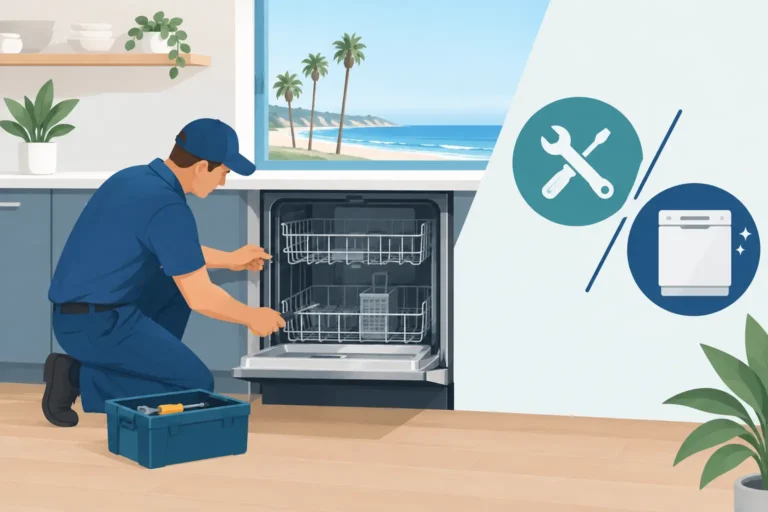
Repair or Replace: A Practical Rental Decision
Most residential washers have an expected service life of about 10 to 13 years, according to ENERGY STAR guidance on appliance replacement and efficiency considerations. That does not mean every 10-year-old washer should be replaced. Some need only a modest repair and have years left. It does mean age should carry more weight when the repair involves a costly electronic or mechanical component.
A useful rule of thumb for property managers is to compare the repair estimate with the cost of a suitable replacement, then consider the washer’s maintenance history. If a repair is well below half the replacement cost and the unit has otherwise been dependable, repair is usually reasonable. If the washer is near or beyond its expected lifespan, has had repeat failures, and needs an expensive board, transmission, tub bearing, or several parts at once, replacement may be the better use of the budget.
The machine type matters too. A quality front-load washer may justify a higher repair cost than a basic top-load model, especially if it matches a stacked dryer or a tight laundry installation. Replacing one half of a stacked pair can be complicated if dimensions, venting, electrical requirements, or matching hardware do not line up.
Watch for Repeat Symptoms
One repair does not always mean a failing washer. A drain pump can wear out as an isolated event. But repeat drain errors, recurring leaks, frequent off-balance loads, and control issues should be documented by unit and date. That history helps distinguish a one-time repair from a machine entering a costly cycle of failures.
It also helps when the occupant reports the issue clearly. Notes such as “stops with water in the drum,” “leaks only during spin,” or “shows OE after 15 minutes” are much more useful than “washer broken.” If possible, ask the resident for the model number and a photo of any displayed code before the appointment.
Preventing Avoidable Washer Calls
Some washer calls are caused by normal wear. Others come from conditions that can be managed. In San Diego, hard water can leave mineral scale on inlet screens and contribute to reduced water flow over time. Coastal properties may also see corrosion on exposed connections sooner than inland units, especially in damp laundry areas.
Routine checks do not replace maintenance, but they can reduce preventable downtime. Make sure the washer is level, keep the area behind it dry and accessible, and remind occupants not to overload the drum or wash heavy rugs unless the manufacturer allows it. Periodically inspect visible hoses for bulges, cracking, or moisture at the connections. For front-load washers, cleaning the door seal and leaving the door slightly open between loads can help reduce odor and mildew buildup.
Property managers also benefit from standardizing appliance records. Keep the brand, model number, installation date, prior repairs, and warranty details with each unit file. When a technician arrives with accurate model information, there is a better chance the right part can be identified quickly.
For rental homes and multifamily units across San Diego, clear decisions matter more than technical jargon. Alfa Appliances can diagnose the washer, provide honest pricing, and explain whether repair makes sense, with same-day appointments often available. Call (619) 458-6508 or book online 24/7 when a laundry-room problem needs a calm, practical answer.