A burner that will not light at dinner time and a cooktop that suddenly flashes an error can both stop a kitchen cold. When homeowners weigh induction versus gas, the right answer is rarely just about how fast water boils. It also comes down to the cookware you own, the ventilation in your kitchen, how you cook, and what a future repair is likely to involve.
Gas remains familiar for good reasons. You can see the flame, use nearly any pan, and make quick heat adjustments. Induction is fast, easy to wipe clean, and does not put an open flame in the kitchen. Both can be dependable appliances when they are installed correctly and maintained reasonably.
Induction versus gas: the everyday difference
A gas cooktop burns natural gas or propane beneath the pan. The flame heats the air, grate, and cookware, so some heat escapes around the pan. Induction uses an electromagnetic field to heat magnetic cookware directly. The glass surface gets warm from the hot pan sitting on it, but the cooking zone itself does not create heat in the same way an electric radiant coil does.
That difference is noticeable when you cook. Induction generally brings a pot to temperature quickly and responds fast when you lower the setting. The U.S. Department of Energy has cited cooking efficiency of roughly 85% for induction compared with about 32% for gas, although actual results depend on the pan size and how it is used. A properly sized pot makes a bigger difference than many people expect.
Gas has one clear convenience advantage: it works with almost every type of cookware. For induction, the base of the pan must be magnetic. Cast iron and many stainless-steel pans work well. Aluminum, copper, glass, and some stainless pans will not work unless they have a magnetic layer on the bottom. A simple magnet test is useful before replacing a cooktop: if the magnet sticks firmly to the base, the pan is usually induction-compatible.
For renters, this may be less of a choice than for a homeowner planning a remodel. If the kitchen already has a gas line and a functioning vent hood, replacing a worn gas cooktop can be the simpler route. If electrical capacity is available and the household values quick cleanup and precise low-temperature cooking, induction can be a good long-term fit.
Ventilation and safety are not optional details
A gas flame produces combustion byproducts, including nitrogen dioxide and carbon monoxide if combustion is incomplete. That does not mean every gas range is unsafe, but it does mean ventilation matters. Use the range hood when cooking, especially with high heat or multiple burners running. The California Air Resources Board and public-health agencies consistently advise using kitchen ventilation when cooking with gas.
If you smell gas, hear a persistent hissing sound, see an abnormal yellow flame, or have soot around a burner, stop using the appliance. Leave the immediate area if the odor is strong, avoid switches and flames, and contact the gas utility or emergency services as appropriate. A gas odor is not a wait-and-see problem.
Induction removes the open flame and combustion issue, but it has its own safety points. The glass top can crack if a heavy pan is dropped on it. A cracked surface should be inspected before further use because moisture reaching internal electrical components can cause more damage. People with implanted medical devices should follow their device manufacturer’s guidance and speak with their clinician about induction cooking.
San Diego kitchens often have limited hood use because mild weather encourages open windows. An open window can help with general airflow, but it is not a substitute for a working hood that captures steam and cooking pollutants at the source. If your hood is noisy, weak, or not turning on, that is worth addressing along with the range issue.
What usually fails on a gas range
Most gas cooking problems are not caused by the gas supply itself. On a cooktop that clicks but will not light, the common causes are a dirty or wet burner cap, a failed spark igniter electrode, or a weak spark module. The electrode is the small ceramic-and-metal piece near the burner that makes the visible spark.
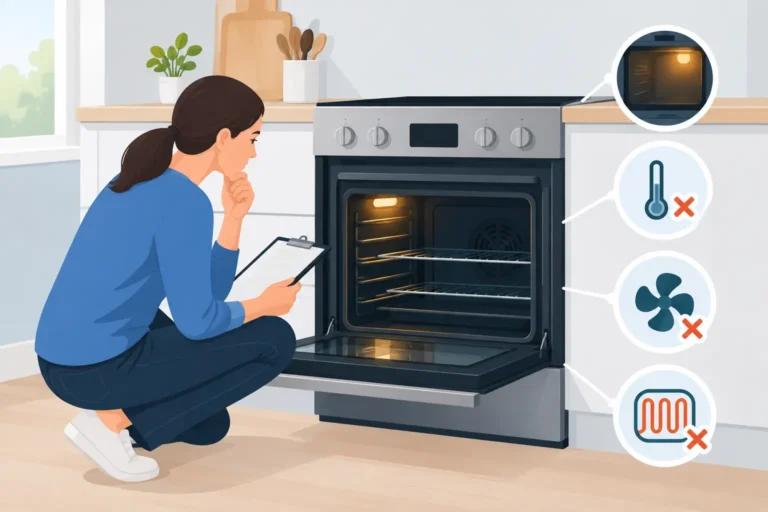
A burner that lights but goes out after releasing the knob can involve a flame-sensing component or, on some models, the safety valve system. An oven that will not heat may have a failed igniter, temperature sensor, bake element on a dual-fuel model, or electronic control problem. Burner caps that are not seated correctly can also cause uneven flames and delayed ignition, so checking their position after cleaning is a safe homeowner step.
For a straightforward gas cooktop ignition repair, a realistic service range is often about $180 to $400, depending on the number of failed parts and access to the model. Replacing a gas oven igniter commonly falls around $200 to $450. A failed control board or gas valve can push a repair into the $350 to $750 range, particularly on premium ranges where parts cost more.
Those are working ranges, not a promise before diagnosis. A technician needs the model number, symptoms, and a basic inspection to separate a $200 igniter issue from a more expensive control or valve problem. Most ignition-related repairs can be completed in one visit when the required part is available, often within one to two hours.
What usually fails on an induction cooktop
Induction problems can look more mysterious because the appliance may appear normal until a pan is placed on the surface. If one zone does not recognize cookware while another works, first test with a known magnetic pan that is centered on the zone. A pan that is too small or has a warped base may not be detected reliably.
When the cookware is compatible, common failed parts include the induction power board, cooling fan, temperature sensor, touch-control assembly, and wiring connections inside the appliance. The power board converts household electricity into the high-frequency current used by the cooking zone. It is usually the costliest major component.
A cooling fan problem matters more than it may seem. Induction electronics create heat underneath the glass, and the fan prevents the boards from overheating. If the cooktop shuts down after several minutes of use, displays an overheating message, or makes an unusual fan noise, it needs attention before repeated use causes a larger failure.
Manufacturer manuals use different fault-code systems, so the exact code must be checked against the model number. For example, Bosch induction manuals use an “E” fault format, while other brands may show an “F” code or a message such as “pan not detected.” Write down the full code before resetting power at the breaker. That small detail can save time during diagnosis.
Simple induction repairs, such as a sensor or fan replacement, often run about $250 to $550. Touch-control repairs commonly land around $300 to $650. Replacing a power board may cost $500 to $1,200 or more, depending on the brand and whether the part is still available. Premium built-in units can justify a board repair more often than lower-priced cooktops because replacement involves countertop fit, electrical work, and a new appliance purchase.
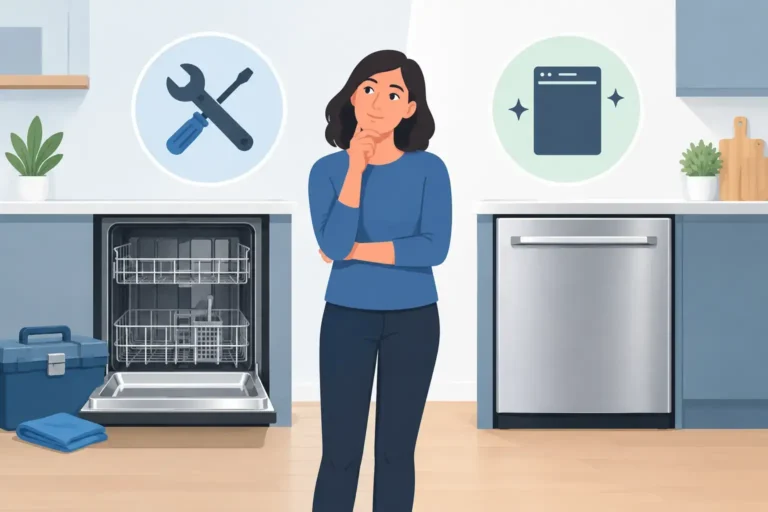
Repair or replace: make the decision with the whole picture
A gas range often has a service life of about 13 to 15 years, while an induction cooktop may last roughly 10 to 15 years with normal use. These are planning ranges, not expiration dates. Maintenance, cooking habits, part availability, and brand all affect the real outcome.
Repair is usually sensible when the appliance is under 10 years old, the issue is limited to one common part, and the estimate is comfortably below the price of a comparable replacement. A $300 igniter repair on a six-year-old gas range is usually a practical repair. The same is often true for a fan or control issue on a newer induction cooktop.
Replacement deserves a serious look when a cooktop has a cracked glass surface plus a failed power board, when a gas range needs several expensive parts at once, or when replacement parts are discontinued. On older appliances, it is reasonable to ask whether the repair will solve one isolated failure or whether it is likely to be followed by additional age-related issues. An honest answer is more useful than putting money into a short-term fix.
For property managers, consistency also matters. Replacing a failing unit may make more sense when repeated service visits disrupt tenants, even if a single repair is technically possible. For a homeowner who loves an existing premium range, a larger repair can still be worthwhile if the rest of the appliance is in good condition.
A practical choice for your kitchen
Choose gas if you want to keep using all of your current cookware, prefer cooking over a visible flame, and already have dependable ventilation and a well-maintained gas setup. Choose induction if fast heating, cooler surrounding surfaces, easy cleanup, and no open flame are higher priorities – and if your cookware and electrical setup support it.
If your gas or induction cooktop is not heating, sparking, recognizing pans, or showing a code, Alfa Appliances can diagnose the problem and explain the repair cost before work begins. We serve San Diego County, charge a $65 service call that is waived with an approved repair, and can often offer a same-day appointment. Every completed repair includes a 90-day labor warranty, so you can make the next decision with clear information instead of guesswork.