A refrigerator that stops cooling or a washer that will not drain creates enough stress without trying to decode a service guarantee. This guide to appliance service guarantees explains what a repair company is actually standing behind, what may be covered separately, and which questions help you avoid surprises before approving work.
A guarantee is not a promise that an appliance will never develop another problem. It is usually a limited commitment to correct a specific repair if the repaired part or the technician’s labor fails within a stated period. That distinction matters when a 12-year-old dryer develops a new issue two months after a heater repair, or when a dishwasher leak turns out to be coming from a different hose.
What an appliance service guarantee should cover
Start with the labor warranty. Labor is the technician’s diagnosis and installation work. If a technician replaces a failed drain pump and the same repair fails because of an installation or workmanship issue, the labor warranty explains whether the company will return and correct it without charging labor again.
At Alfa Appliances, repairs include a 90-day labor warranty. The repair order should identify the appliance, the diagnosed problem, the work completed, and the date. Keep that document. It gives everyone a clear starting point if you need to call back.
Parts coverage is often different from labor coverage. A replacement part may have its own manufacturer warranty, which can be longer or shorter than the service company’s labor warranty. Some parts suppliers cover a defective part but do not cover the labor required to install the replacement. Ask this plainly: if the part itself fails during its warranty period, who pays for the return visit and installation?
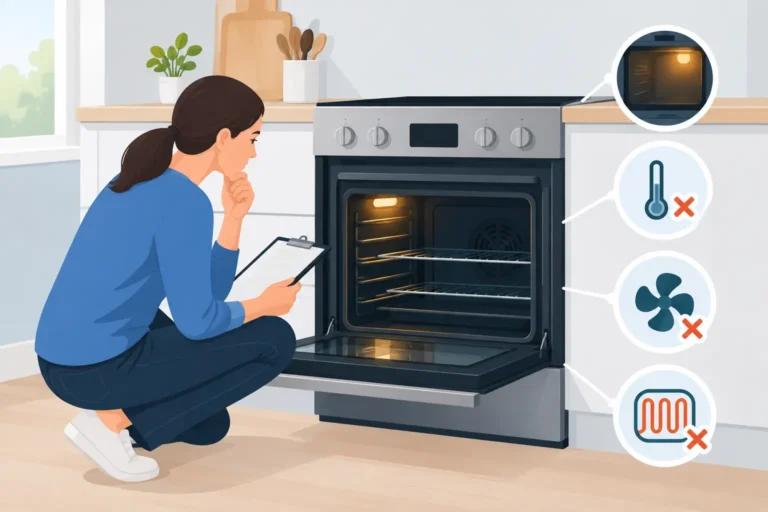
A solid service guarantee also defines the original problem. For example, a refrigerator may not cool because of a failed evaporator fan motor, a defrost heater, a compressor issue, or a control-board problem. These are different faults, even though all can leave food warm. If the fan motor is replaced and the control board later fails, that is generally a new repair, not a repeat of the first one.
A guide to appliance service guarantees: read the limits
The fine print is not there to trick you, but it does set reasonable boundaries. A service company cannot guarantee a repair against conditions outside its control, such as a power surge, plumbing leak, pest damage, misuse, or a separate failed component.
Common exclusions are worth understanding before work begins:
- Damage caused by electrical surges, water intrusion, rodents, or physical impact.
- A different failure that produces similar symptoms.
- Pre-existing corrosion, worn wiring, cracked cabinets, or inaccessible installation conditions.
- Maintenance issues, such as a dryer vent packed with lint or a refrigerator condenser restricted by heavy dust.
Those exclusions are especially relevant near the coast. Salt air and humidity in parts of San Diego can accelerate corrosion on appliance connections and electronic components. A technician can repair the failed part found during the visit, but no honest company can guarantee that corroded components elsewhere in an aging appliance will remain trouble-free.
Also ask whether the guarantee applies only when the appliance has not been serviced or altered by another party after the repair. That is standard. Once someone else changes the wiring, replaces a part, or adjusts the appliance, it becomes difficult to determine what caused a later failure.
A warranty is not an appliance protection plan
Three terms are often used as though they mean the same thing: manufacturer warranty, repair warranty, and home warranty plan. They are not interchangeable.
A manufacturer warranty usually comes with a new appliance and may cover certain parts for a defined period. It may require service through an authorized network, and coverage varies by brand and component. For example, a refrigerator’s sealed system – the compressor, evaporator, condenser, and related tubing that move refrigerant – can have different coverage from its control board or ice maker. Check your model’s owner documentation rather than relying on a general statement about the brand.
A repair warranty or service guarantee applies to the specific job performed by the repair company. It is usually more direct: a documented repair, a stated labor period, and clear terms for a callback.
A home warranty plan is a service contract. It may require a service fee, prior authorization, coverage limits, and use of an assigned provider. Before scheduling a repair, contact the plan administrator if you expect it to pay. Getting an independent diagnosis first can be useful, but reimbursement rules depend on the plan.
Questions to ask before you approve a repair
You do not need technical training to make a sound decision. Ask what failed, whether the quoted price includes parts and labor, and what the guarantee covers if the same repair does not hold. A technician should be able to explain the answer in plain English.
It also helps to ask whether the appliance is a reasonable repair candidate. The U.S. Department of Energy’s ENERGY STAR guidance notes that appliance life varies by model and use, but age remains a practical factor. A typical refrigerator may last about 10 to 15 years, while washers and dryers commonly last around 10 to 13 years. A repair on a younger appliance is often sensible, while a major sealed-system or control-board repair on a much older unit deserves a frank cost comparison.
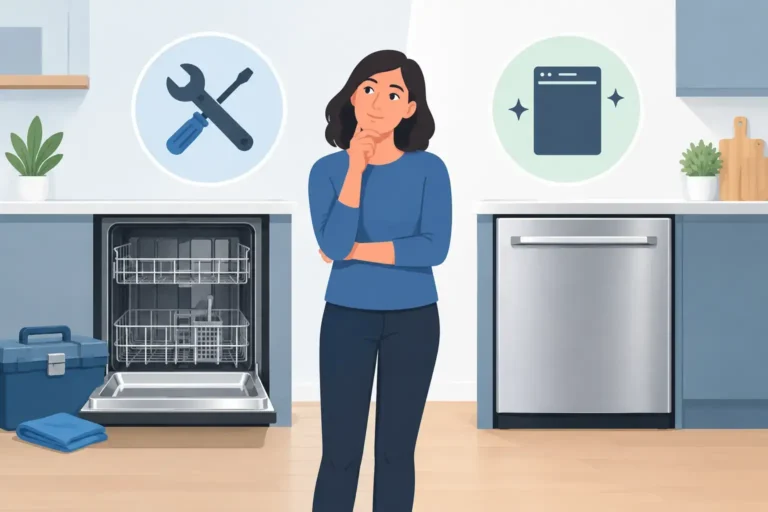
The price of the repair matters, but so does the repair’s scope. Replacing a washer drain pump, dishwasher circulation pump, or oven igniter can often be a straightforward repair if the rest of the appliance is in good condition. A compressor, transmission, or multiple electronic boards can shift the decision toward replacement. Parts prices vary widely by brand and model, especially for premium appliances, so a responsible technician should confirm the needed part before presenting a final repair recommendation.
For San Diego renters, the right first call may be to the landlord or property manager. Do not authorize a repair that you may not be responsible for under your lease. Property managers should keep repair invoices by unit and appliance serial number, particularly where recurring hard-water buildup or older installed appliances make repeat issues more likely.
What a fair service visit looks like
A service call pays for diagnosis, travel, and the time needed to identify the fault. It should not feel like a vague entry fee. You should know the diagnostic fee before the appointment and whether it is credited toward an approved repair. Alfa Appliances charges a $65 service call and waives it when the customer approves the repair.
During the visit, a technician may need to run a cycle, check an error code, inspect accessible connections, and test the appliance’s normal functions. Diagnosis time depends on the symptom. A visible broken dryer belt may be identified quickly, while an intermittent refrigerator cooling issue can take longer because the appliance may behave normally when the technician arrives.
Error codes can help, but they are clues rather than a final diagnosis. On many LG washers, an OE code points to a drainage problem. A blocked drain hose, clogged filter on applicable models, failing drain pump, or wiring issue can all be involved. On many Samsung refrigerators, error codes can identify a sensor or communication concern, but the code alone does not prove which part needs replacement. A guarantee should apply to the confirmed repair, not just the first code displayed.
Protect your coverage and your household
Follow the manufacturer care instructions and keep receipts for completed work. Simple homeowner care can prevent avoidable calls: clean the dryer lint screen after every load, keep refrigerator door gaskets clean, replace water filters as directed, and avoid overloading washers.
Some conditions should not wait for a warranty discussion. Stop using a dryer that smells hot or has poor airflow. The U.S. Fire Administration identifies failure to clean dryers as a leading factor in dryer fires. Stop using a gas range or oven if you smell gas, leave the area if the odor is strong, and contact the gas utility or emergency services as appropriate. Do not attempt to locate or repair a gas leak yourself.
A guarantee is most useful when it is clear, written down, and tied to a specific diagnosis. If an appliance in San Diego is acting up, Alfa Appliances can explain the failure, the repair options, and the 90-day labor warranty before you decide. Call (619) 458-6508 or book online for a same-day appointment when availability allows.