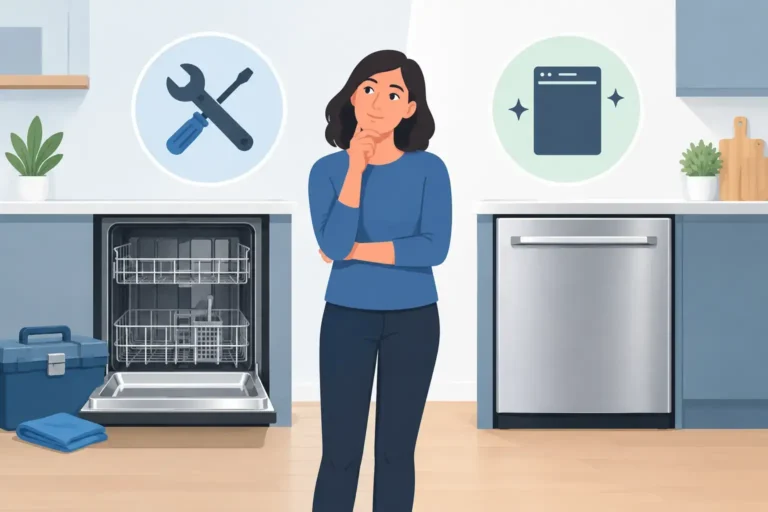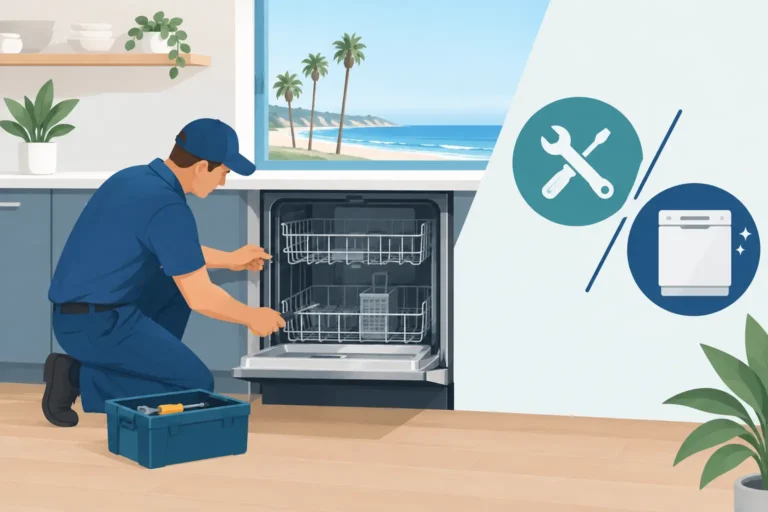
A dishwasher that leaves standing water or a dryer that suddenly takes two cycles creates the same question: technician versus handyman – who should you call? The answer depends less on the appliance’s size and more on what has failed, what could be unsafe, and whether an accurate diagnosis will prevent paying for the wrong repair.
A capable handyman can be a sensible choice for simple household work around an appliance. But when the problem involves controls, internal components, water leaks, heat, gas, drainage, or a manufacturer error code, an appliance technician is usually the better fit. The goal is not to make a small problem sound bigger than it is. It is to fix the actual cause without creating a second problem behind the machine.
Technician Versus Handyman: The Practical Difference
A handyman generally works across many parts of a home: mounting a microwave, adjusting a cabinet opening, leveling a washing machine, replacing a damaged door sweep, or handling minor installation-related tasks. That broad skill set is useful, especially for rental turnovers and small maintenance lists.
An appliance technician focuses on how a specific machine operates and fails. They test components, interpret fault codes, verify whether a part is receiving the proper signal, and determine whether the repair makes financial sense. For a refrigerator, that may mean separating a failed evaporator fan from a defrost issue or a door-seal problem. For a washer, it may mean finding out whether a drain error comes from a blocked hose, worn drain pump, or a control issue.
The difference matters because appliance symptoms often overlap. A refrigerator that is not cooling well could have dirty condenser coils, a failed fan motor, a defrost failure, or a sealed-system problem. Replacing a visible part without confirming the cause can waste money and leave the refrigerator warm.
When a Handyman May Be the Right Call
A handyman is often appropriate when the appliance itself works but the surrounding setup needs attention. Examples include securing a loose range hood cover, correcting a machine that rocks because it is not level, trimming or adjusting a cabinet opening for a replacement appliance, or replacing an accessible dryer vent transition duct when no appliance fault is involved.
Homeowners can safely handle a few basic checks first. Confirm that the breaker has not tripped, clean the dryer lint screen, make sure a dishwasher filter is clear, check that a refrigerator door closes fully, and see whether a washer is sitting level. These checks do not require opening the appliance or touching wiring, gas connections, or refrigerant lines.
If the problem goes away after cleaning a filter or resetting a tripped breaker once, great. If it returns, that is useful diagnostic information, not a reason to keep resetting and hoping.
When You Need an Appliance Technician
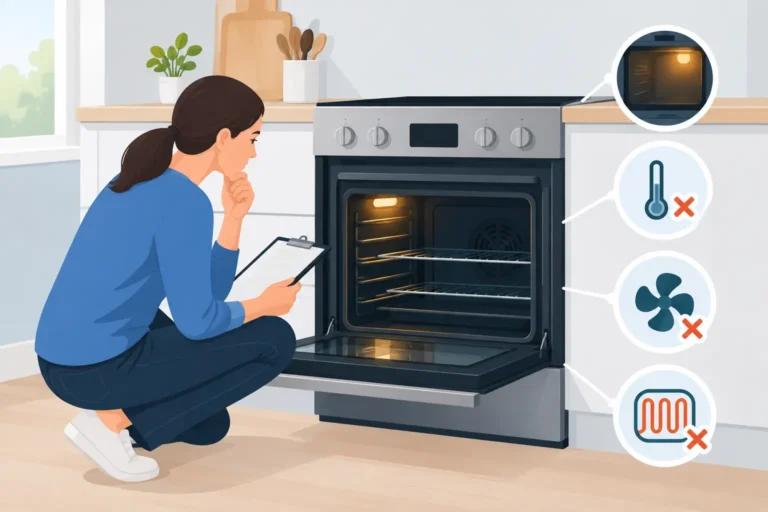
Call an appliance technician when the unit is leaking, overheating, tripping a breaker, displaying an error code, making new grinding or buzzing noises, or failing to complete a cycle. A technician is also the safer choice for gas ranges, ovens, cooktops, dryers, and any appliance with electronic controls.
Stop using the appliance and treat the issue as urgent if you smell gas, see smoke, notice scorching, or suspect carbon monoxide exposure. Leave the area if there is a gas odor and contact the gas utility or emergency services as appropriate. Do not try to locate or repair a gas leak yourself.
Dryers deserve special attention. The U.S. Fire Administration reports that failure to clean is a leading factor in home clothes dryer fires. Cleaning the lint screen after every load helps, but a dryer that runs hot, takes much longer to dry, or has a burning smell needs professional attention. The cause may be restricted venting, a failed heating component, or an airflow problem inside the machine.
What a Proper Diagnosis Can Save You
The most expensive appliance repair is often the one performed on the wrong part. Modern machines use sensors, control boards, valves, motors, and safety switches that can produce similar symptoms when they fail.
Consider a dishwasher that will not drain. On many models, a clogged filter or food debris near the drain area is the simple answer. But Samsung manuals use the 5C code for a drainage check, LG commonly uses OE for a drain error, and Bosch uses E24 for a drainage fault. Those codes point the diagnosis toward the drain system, not automatically to one bad part. A technician still needs to determine whether the issue is a blockage, drain pump, installation problem, or something else.
Typical appliance failures also have different price ranges. A dishwasher drain pump repair commonly falls around $200 to $450, depending on the model and part cost. Replacing a washer drain pump is often in a similar $200 to $500 range. A refrigerator evaporator fan motor repair may run roughly $250 to $500, while a failed electronic control board can range from about $300 to $700 or more on premium models. These are realistic planning ranges, not promises, because access, model design, and part availability change the final cost.
A qualified diagnosis helps you decide whether that range is reasonable before authorizing work. At Alfa Appliances, the service call is $65 and is waived when you approve the repair. You should receive a plain explanation of the failed part, the total repair cost, and whether the repair is worth doing.
Repair or Replace? Age Changes the Answer
Not every appliance deserves a repair, and an honest technician should say so. Age, condition, repair cost, prior breakdowns, and replacement value all matter.
The National Association of Home Builders lists average life expectancies of about 13 years for refrigerators, 10 years for dishwashers, 10 years for washing machines, and 13 years for dryers. These are averages, not expiration dates. A well-maintained appliance can last longer, while heavy use, poor ventilation, hard water, and neglected cleaning can shorten its life.
For a six-year-old washer with a failed drain pump, repair is commonly reasonable if the machine has otherwise been dependable. For a 14-year-old refrigerator with a costly compressor or sealed-system issue, replacement may be the more practical call. Premium appliances can be different: a high-end built-in refrigerator may justify a more involved repair because replacement involves cabinetry, installation, and a much higher purchase price.
A useful rule of thumb is to compare the repair estimate with the appliance’s age, expected remaining life, and the cost of a comparable replacement. Do not base the decision on age alone. A $250 repair on an older dryer can be sensible; a $900 repair on a basic dishwasher may not be.
San Diego Conditions Can Affect the Decision
San Diego homes have appliance challenges that do not always show up in a manual. Hard water can leave mineral scale in dishwasher components and washing machine valves. That buildup can reduce water flow and contribute to poor cleaning or fill problems over time.
Coastal humidity and salt air can also speed up corrosion on exposed metal connections and range hood components, particularly closer to the coast. During heat waves, refrigerators work harder to remove heat, especially when condenser airflow is restricted or the door is opened frequently in a busy household.
Those conditions do not mean every problem needs a major repair. They do mean that routine cleaning, good airflow around a refrigerator, and early attention to leaks or unusual noises can prevent a smaller issue from becoming a larger one. For landlords and property managers in San Diego, documenting model numbers, error codes, and symptoms before scheduling service also helps avoid delays.
Questions to Ask Before You Approve a Repair
You do not need a technical background to make a good decision. Ask what part failed, what caused the symptom, whether the appliance is safe to use while waiting, and whether the repair includes a labor warranty. If the diagnosis involves an expensive part, ask whether there are other likely failures to consider based on the appliance’s age.
Be cautious if someone recommends replacing parts before explaining the diagnosis, dismisses an error code without testing, or cannot tell you whether a repair is economical. A fair service visit should leave you with enough information to choose repair or replacement confidently.
If an appliance in your San Diego home is leaking, not heating, not cooling, or showing a code, Alfa Appliances can explain what is wrong before work begins. Call (619) 458-6508 or book online for same-day availability when scheduling allows, with a 90-day labor warranty on completed repairs.