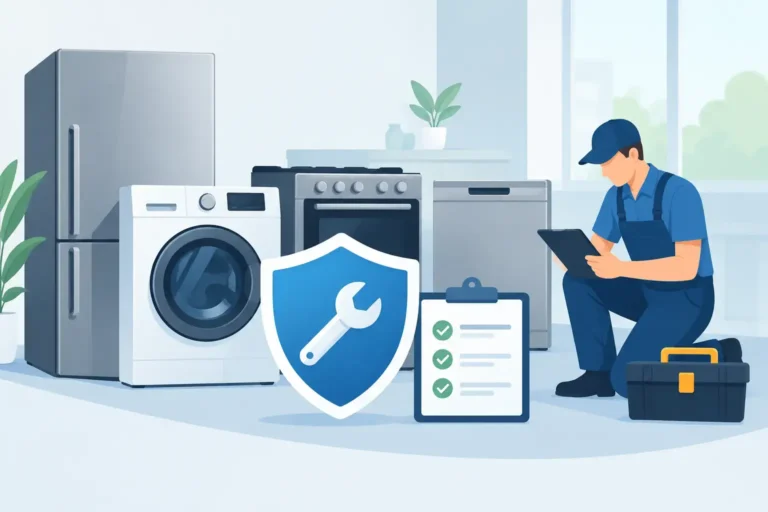
A refrigerator that stops cooling or a washer that will not drain creates enough disruption without a service appointment feeling like another chore. Knowing how to prepare for an appliance service visit helps the technician spend time diagnosing the actual problem, not moving boxes or tracking down basic details. It can also make the difference between a diagnosis-only visit and a repair completed while the technician is already there.
Prepare for an appliance service visit before the technician arrives
Start by making a clear path to the appliance. A technician needs room to safely open doors, pull out racks, test controls, and, when necessary, move an appliance slightly for access. Move laundry baskets, cleaning supplies, pet bowls, rugs, and anything stored on top of or directly beside the unit. For a refrigerator, clear a path from the entry to the kitchen as well. For a washer or dryer in a tight closet, remove items that are blocking the doors or stacked in front of the machines.
You do not need to empty an entire refrigerator or unload every dish from a dishwasher. But removing fragile items, excess food from a freezer drawer, and anything that could fall when a door is opened is helpful. If the appliance is built in, leave cabinet doors and nearby drawers accessible.
If you rent, check with your landlord or property manager about who can authorize repairs and approve costs. Property managers can save time by providing tenant contact information, entry instructions, appliance details, and approval limits before the appointment. That avoids a technician diagnosing the problem only to wait for someone else to authorize the next step.
Keep the appliance connected unless it is unsafe
Leave the appliance plugged in and connected to its normal water supply when it is safe to do so. Many faults only appear during a cycle or when the unit has power. A dishwasher that leaks only after filling, for example, cannot be fully assessed if it has been disconnected.
There are clear exceptions. Stop using the appliance and disconnect power if you see smoke, sparks, scorching, or a melted plug. Do not keep running a dryer that smells like it is burning, and do not operate a gas range, oven, or dryer if you smell gas. The Consumer Product Safety Commission advises leaving the area immediately if there is a gas odor, avoiding switches and flames, and calling the gas utility or emergency services from outside.
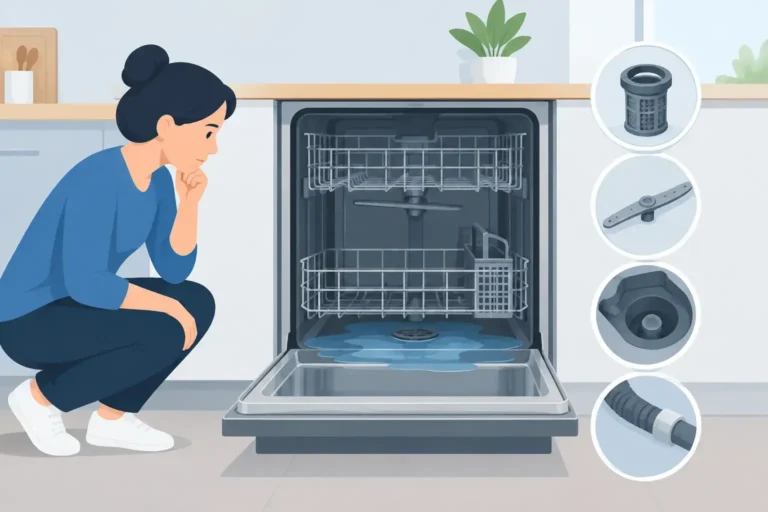
For a leaking washer, dishwasher, or refrigerator, shut off use and place towels around the area if you can do so safely. Do not remove panels or attempt to reach wiring, hoses, or internal components. A small leak can come from a loose connection, but it can also be caused by a failed inlet valve, cracked drain hose, worn door gasket, or blocked defrost drain.
Write down what changed and when
The best description is specific and short. “The refrigerator is warm” is a starting point. “The freezer stayed cold, but the fresh-food section warmed up over two days and the fan started making a scraping noise” gives the technician useful direction before testing begins.
Note when the issue happens, whether it is constant or intermittent, and what the appliance was doing at the time. Include any error code exactly as it appears. On many LG washers, an OE code points to a drainage problem. Samsung washer manuals commonly use 5C for a drain-related error. Bosch dishwasher manuals use E15 on many models to indicate water has collected in the appliance base. Codes are clues, not final diagnoses, because a blocked drain, weak drain pump, damaged wiring, or a sensor issue can lead to a similar message.
A quick phone video is useful for noises that come and go. Record a dryer squeal during startup, a refrigerator clicking sound, or a washer that bangs during spin. Do not try to recreate a dangerous symptom just for a video. If the unit only failed once, write down the date, the cycle selected, and whether there was an unusually large load.
Mention recent changes, too. A new detergent, a power outage, kitchen renovation, appliance move, water shutoff, or unusually hot weather can matter. During San Diego heat waves, refrigerators may run longer and struggle more when doors are opened frequently or the condenser area cannot shed heat. That does not automatically mean the compressor has failed, but it is helpful context.
Find the model and serial numbers
The model number lets a technician identify the right parts, technical information, and common failure points for your exact appliance. The brand name alone is not enough. Two Whirlpool refrigerators or GE dishwashers can use different parts and controls.
Look for the model and serial tag inside a refrigerator compartment, around a dishwasher door frame, beneath a cooktop edge, along a range frame, or inside a washer or dryer opening. The location varies by model. Take a clear photo instead of trying to copy a long number by hand. If the label is hard to reach, do not pull out a heavy appliance solely to find it.
This step is particularly useful for premium built-in appliances and older units. Parts availability can vary by model and age, and an accurate number helps set realistic expectations before a repair is approved.
Do the safe checks that can rule out simple problems
A few homeowner checks are worthwhile because they can prevent an unnecessary service call. Check that a tripped breaker has not cut power to the appliance. Confirm that the appliance door closes fully and that a refrigerator or dryer door seal is not blocked by an item. Clean the dryer lint screen before every load, as manufacturers recommend.
The U.S. Fire Administration identifies lint buildup as a leading factor in dryer fires. If your dryer takes more than one cycle to dry a normal load, feels unusually hot, or has a burning smell, stop using it until the venting and appliance can be evaluated. Cleaning the lint screen is safe. Taking apart the dryer or working on the vent connection inside a wall is not a good homeowner repair.
For a washer that shakes, check whether it is overloaded and whether all four feet are firmly on the floor. For a dishwasher that does not clean well, make sure the spray arms are not blocked by large pans and that the filter is clean according to the owner’s manual. In parts of San Diego County with hard water, mineral scale can also affect dishwasher performance, ice makers, and water flow over time.
Do not reset breakers repeatedly, bypass a door switch, use an extension cord for a major appliance, or force a stuck component. Those actions can turn a manageable repair into a safety issue.
Make the visit easier for your household
Plan for an adult who can describe the issue and make decisions to be available, either in person or by phone. Secure pets in another room. Let the technician know about parking instructions, gate codes, stairs, or a difficult elevator in advance. For condos and managed properties, confirm any building rules for service access.
Expect some normal diagnostic testing. A technician may run a wash or drain function, check temperatures, inspect seals, listen for motor or fan noise, and test operation at the controls. Common repair parts include drain pumps in washers and dishwashers, heating elements in dryers and ovens, water inlet valves in refrigerators and washers, igniters in gas ranges, and door gaskets across several appliance types. The failed part still needs to be confirmed before anyone quotes a repair.
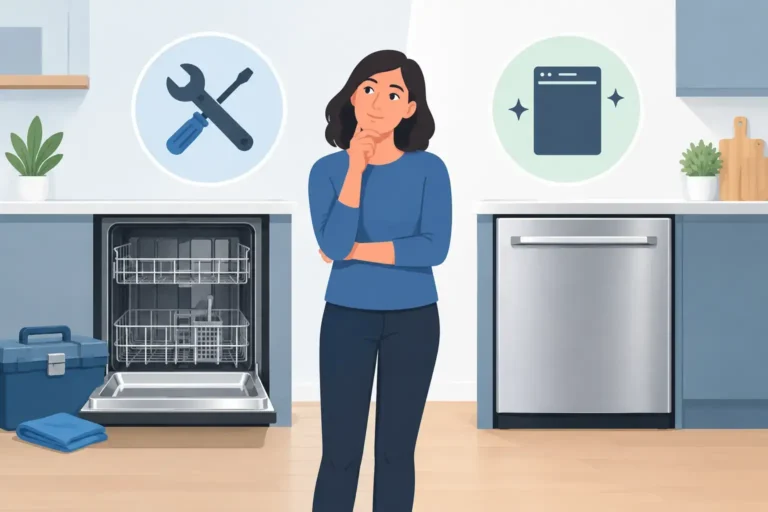
At the end of the diagnosis, ask what failed, whether continued use is safe, what the repair includes, and whether the appliance’s age makes replacement more sensible. Honest answers matter here. A repair can be a good value when the appliance is otherwise in solid condition and the needed part is available. Severe corrosion, repeated major failures, or a costly sealed-system refrigerator repair may call for a different conversation.
If you need help in San Diego, Alfa Appliances can explain the diagnosis and repair options clearly before work begins. The $65 service call is waived when you approve the repair, and all repairs include a 90-day labor warranty. Same-day appointments are often available when scheduling allows.