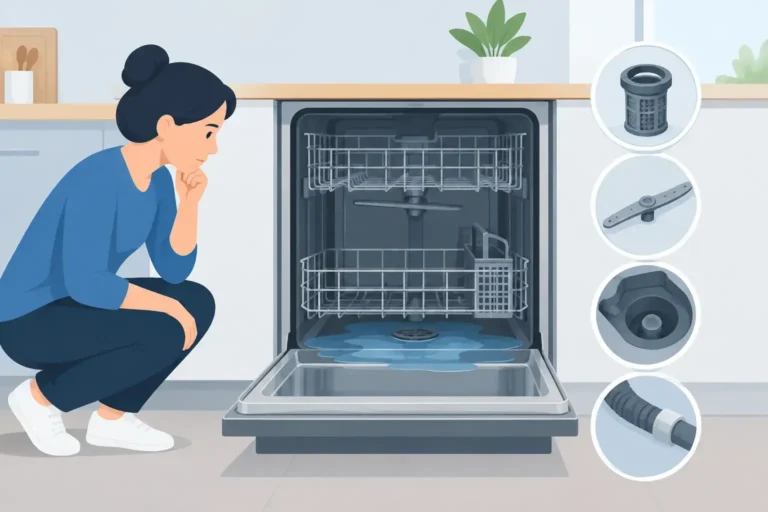
A little water in the very bottom of the dishwasher tub is not always a problem. Most machines retain a small amount in the sump, the recessed area beneath the filter, to keep seals from drying out. But if you can see standing water across the tub, dirty water is coming back after the cycle, or dishes smell sour, it is fair to ask why dishwasher leaves water behind.
The good news is that this is usually a drain-path problem, not a reason to replace the whole appliance. Food debris, a clogged sink connection, a tired drain pump, or a failed electronic control can all stop a dishwasher from emptying properly. The right next step depends on when the water appears and how the machine behaves during its drain cycle.
First, tell normal leftover water from a drainage problem
Open the dishwasher shortly after a completed cycle and look only at the lowest point under the filter. A shallow amount there may be normal. Water covering the flat bottom of the tub, pooling around the door, or reaching the lower rack is not.
Also pay attention to the water itself. Clear water that appears hours after the dishwasher finished can point to water backing up from the sink drain or garbage disposal. Cloudy water with food particles usually means the dishwasher did not drain at the end of its cycle. If the water is leaking onto the floor, stop running the dishwasher until it is checked. A floor leak can damage cabinets and flooring quickly.
Why a dishwasher leaves water after a cycle
The filter or sump area is blocked
This is one of the most common causes. The filter catches food particles before they reach the drain pump. When it gets coated with grease, labels, broken glass, or food residue, water cannot move through the system fast enough.
Most manufacturers, including Bosch and KitchenAid, instruct owners to clean the filter regularly. The exact schedule depends on use and whether dishes are scraped first, but a monthly check is sensible for a busy household. San Diego’s hard water can also leave mineral film on filters and spray arms, making routine cleaning more useful than it may be in softer-water areas.
With the dishwasher off, remove the lower rack and take out the filter only as described in your owner’s manual. Rinse it under warm water and use a soft brush if needed. Do not force anything into the drain opening or reach into it. There may be sharp debris or a damaged part beneath the cover.
The drain hose or sink connection is restricted
The dishwasher sends water through a drain hose, usually into a garbage disposal or a branch of the sink drain. A kinked hose, grease buildup in the plumbing, or a blockage at that connection can leave water in the tub.
If a new dishwasher has never drained correctly, one simple possibility is the garbage disposal knockout plug. This is a small plug inside the disposal’s dishwasher inlet that must be removed during installation. It is an installation issue, not a dishwasher failure, and a technician can confirm it without guesswork.
A clogged kitchen sink is another clue. If the sink drains slowly, gurgles, or fills when the dishwasher runs, the restriction may be in the household drain rather than the appliance. In that case, a plumbing repair may be needed before the dishwasher can drain normally.
The garbage disposal or air gap is causing backup
Run the garbage disposal with cold water before starting a dishwasher load if the dishwasher drains through it. Food left in the disposal can interfere with drainage. If your sink has an air gap, the small fixture often located near the faucet, water spilling from it indicates a restriction downstream.
Do not ignore water that returns to the dishwasher after you have emptied the sink. That usually means wastewater is flowing backward through the drain connection. It is unpleasant, but it does not automatically mean the dishwasher needs replacement.
The drain pump has failed or is obstructed
The drain pump is the small motor that pushes used water out of the dishwasher. A humming sound with no drainage can mean the pump is trying to run but is blocked or worn out. Complete silence during the drain portion of a cycle can point to the pump, wiring, door-switch signal, or control board.
This is not a homeowner repair. Drain-pump replacement involves accessing internal components and checking electrical connections. For many common dishwasher models, the repair itself often takes about one to two hours once the correct part is available. The final cost varies by brand, access, and part price, but a typical drain-pump repair often falls around $250 to $500, including labor and parts. Premium European models can run higher.
The dishwasher is not getting the signal to drain
Modern dishwashers use sensors and an electronic control board to determine when to wash, rinse, and drain. A failed float switch can incorrectly tell the machine there is already too much water. A control-board fault may prevent the drain pump from receiving power at the right time.
Error codes can help, though they are not a complete diagnosis. Bosch dishwashers commonly use E24 for a drain issue and E25 for a blocked drain pump area or filter problem, according to Bosch owner documentation. GE dishwashers may display C1 when the unit cannot drain within the expected time, as described in GE Appliances support materials. The code identifies the symptom, not necessarily the failed part.
Safe checks before scheduling service
Start by confirming the kitchen sink drains normally. Then clean the dishwasher filter according to the manual, check that nothing is preventing the door from closing, and run a cancel or drain cycle if your model has one. Listen for the drain pump near the end of that cycle.
Avoid chemical drain cleaners in the dishwasher or sink connection. They can damage hoses, seals, and internal parts, and they create a safety issue for whoever later opens the system. Do not tip the appliance, remove panels, or attempt to disconnect the drain hose under the sink. Those jobs can cause leaks or electrical damage when handled without the right tools.
If you are a renter, report standing water promptly to your landlord or property manager. Take a photo before removing the water, especially if it has overflowed or caused cabinet damage. Property managers in San Diego often need to distinguish between a dishwasher issue and a shared plumbing issue, and that detail helps get the right trade to the home.
Is it safe to keep using a dishwasher with water in it?
If there is only a small, clean amount in the sump and the dishwasher otherwise drains, it is generally fine to monitor. If standing water remains after every cycle, pause use until the cause is found. Repeated cycles can leave food soil inside the machine, create odors, and eventually allow water to escape at the door.
Stop using it immediately if water is reaching the floor, the dishwasher trips a breaker, you smell burning, or the water is mixed with sewage from a backed-up sink line. Those are no longer simple cleaning issues. The Consumer Product Safety Commission advises addressing appliances that show electrical warning signs rather than continuing to operate them.
When repair makes sense
A dishwasher typically lasts about 10 to 13 years, according to ENERGY STAR guidance on appliance life expectancy. For a machine under about eight years old with a blocked drain, drain-pump issue, or float-switch failure, repair is often the practical choice. A repair becomes harder to justify when an older unit has multiple problems, such as a leaking tub seal, corroded racks, poor cleaning, and a failed control board at the same time.
Brand and model matter. A Miele or Bosch dishwasher may have a higher part cost but can still be worth repairing because replacement is expensive. On a basic older model, a major control-board repair may be close enough to replacement cost that buying new makes more sense. A technician should explain both options plainly before work begins.
If your dishwasher is leaving standing water, Alfa Appliances can identify whether the issue is the filter, drain path, pump, or controls and explain the repair cost before proceeding. We serve San Diego County, and same-day appointments are often available; the $65 service call is waived when you approve the repair, with a 90-day labor warranty included.